
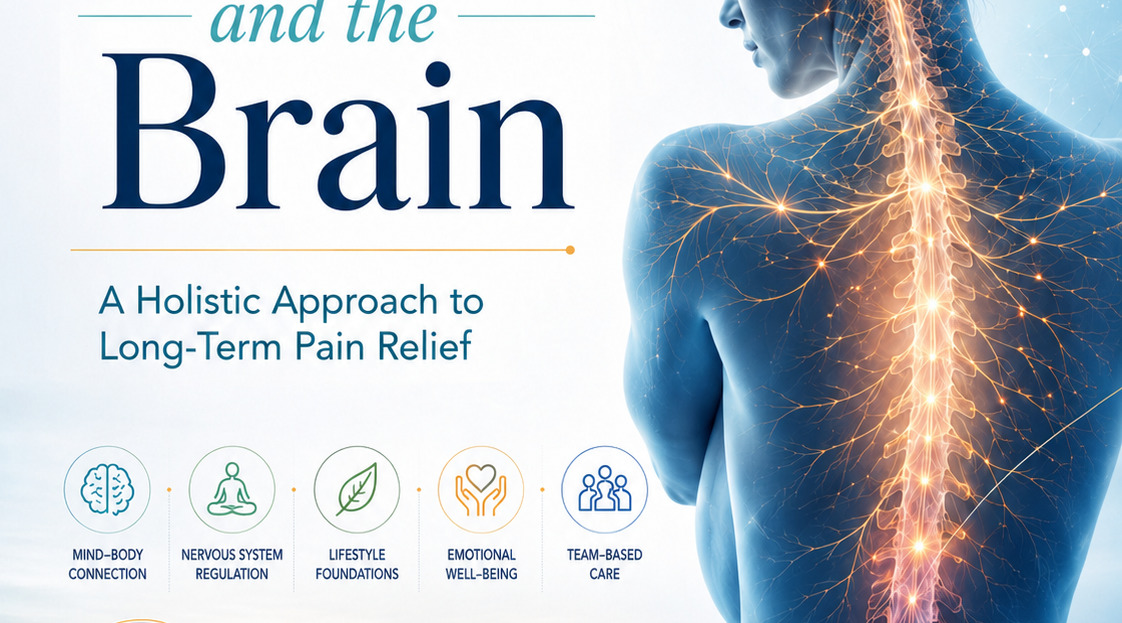
Chronic Pain and the Brain: Why a Holistic Approach Can Help Long-Term Pain Relief
Chronic pain is influenced by the body, nervous system and brain. Learn how holistic pain management, nerve blocks, physiotherapy and pain reprocessing therapy may help.
What is chronic pain?
Chronic pain is usually described as pain that persists for longer than expected, often for more than three months. It may affect the back, neck, joints, nerves, muscles or multiple areas of the body.
However, chronic pain is more than a physical sensation. It is both a sensory and emotional experience. Two people with the same diagnosis may experience pain very differently.
This does not mean the pain is “imaginary” or “all in the mind”. The pain is real. But the way the brain and nervous system process pain signals can strongly influence how intense, persistent and distressing the pain becomes.
How does the brain influence pain?
Pain is not simply a direct signal from injured tissue. Instead, the brain receives information from the body and nervous system, then interprets that information based on many factors.
These may include:
- Previous pain experiences
- Past trauma or overwhelming experiences
- Fear, anxiety or stress
- Sleep quality
- Emotional wellbeing
- Social and cultural factors
- The brain’s perception of threat or danger
When the nervous system becomes over-protective, it may continue to amplify pain signals even when tissues have healed. This process can help explain why pain sometimes persists despite normal scans, successful surgery or repeated physical treatments.
Why treating the body alone may not be enough
Many chronic pain treatments focus on the physical source of pain, such as joints, muscles, discs, nerves or inflammation. These treatments can be helpful, especially when there is a clear physical driver.
For example, nerve blocks or steroid injections may reduce pain and inflammation. In some patients, these treatments can provide meaningful relief. However, the benefit may be temporary, often lasting weeks to a few months.
If the brain and nervous system continue to process pain signals in a way that maintains pain, symptoms may return.
This is why chronic pain often needs a broader strategy — one that treats both the body and the way pain is processed.
What is holistic chronic pain management?
Holistic chronic pain management looks at the whole person, not just the painful body part. It considers physical, emotional, psychological and neurological contributors to pain.
A holistic pain management plan may include:
- A detailed pain assessment
- Medication, where appropriate
- Targeted procedures such as nerve blocks or injections
- Physiotherapy and guided exercise
- Education about pain science
- Psychological support
- Pain Reprocessing Therapy
- Lifestyle strategies to improve sleep, movement and confidence
The aim is not simply to reduce pain temporarily, but to help patients understand what may be maintaining their pain and develop longer-term strategies for improvement.
What is Pain Reprocessing Therapy?
Pain Reprocessing Therapy is an approach that helps patients change how the brain interprets pain signals.
In some forms of chronic pain, the brain can become highly sensitised to signals from the body. Pain Reprocessing Therapy aims to reduce this sense of threat and help the nervous system become calmer and less protective.
This does not mean ignoring pain. It means learning to interpret pain differently, reduce fear around symptoms, and gradually retrain the brain’s response.
For selected patients, this can be a valuable part of a wider chronic pain management plan.
Why a team approach can help
Chronic pain often affects many areas of life, including sleep, mood, movement, work, relationships and confidence.
For this reason, effective chronic pain care often involves a multidisciplinary approach. This may include a pain physician, physiotherapist and psychologist working together.
A pain physician can assess the medical and physical contributors to pain, recommend appropriate interventions, and guide a broader treatment plan. Physiotherapy can support safe movement and strengthening. Psychological support can help address fear, stress and the emotional impact of persistent pain.
Together, this approach can help patients feel more in control.
When should you consider seeing a pain specialist?
You may benefit from a holistic pain assessment if:
- Your pain has lasted longer than expected
- Treatments have only helped temporarily
- Your scans or investigations do not fully explain your symptoms
- Pain is affecting your sleep, mood or daily life
- You feel anxious, fearful or frustrated about ongoing pain
- You want a more complete explanation of what may be maintaining your pain
Seeing a pain specialist does not mean giving up on physical treatment. It means looking more deeply at all the factors that may be contributing to persistent pain.
Chronic pain treatment in York
Dr Karthikeyan Dhandapani is a pain specialist who supports patients with chronic pain through a comprehensive and individualised approach.
His management plans may include interventional treatments such as nerve blocks, guidance on exercise and physiotherapy, and support using pain reprocessing techniques. Online sessions may also be available for pain reprocessing therapy, making care more accessible for suitable patients.
Take the next step
If you are living with persistent pain, a holistic approach may help you understand your symptoms more clearly and explore treatment options that go beyond short-term relief.
Chronic pain can become more manageable with the right support, education and personalised care.
To learn more or book an appointment, visit:
Dr Karthikeyan Dhandapani’s RatedDoctor profile
https://www.rateddoctor.com/specialist/karthikeyan-dhandapani