
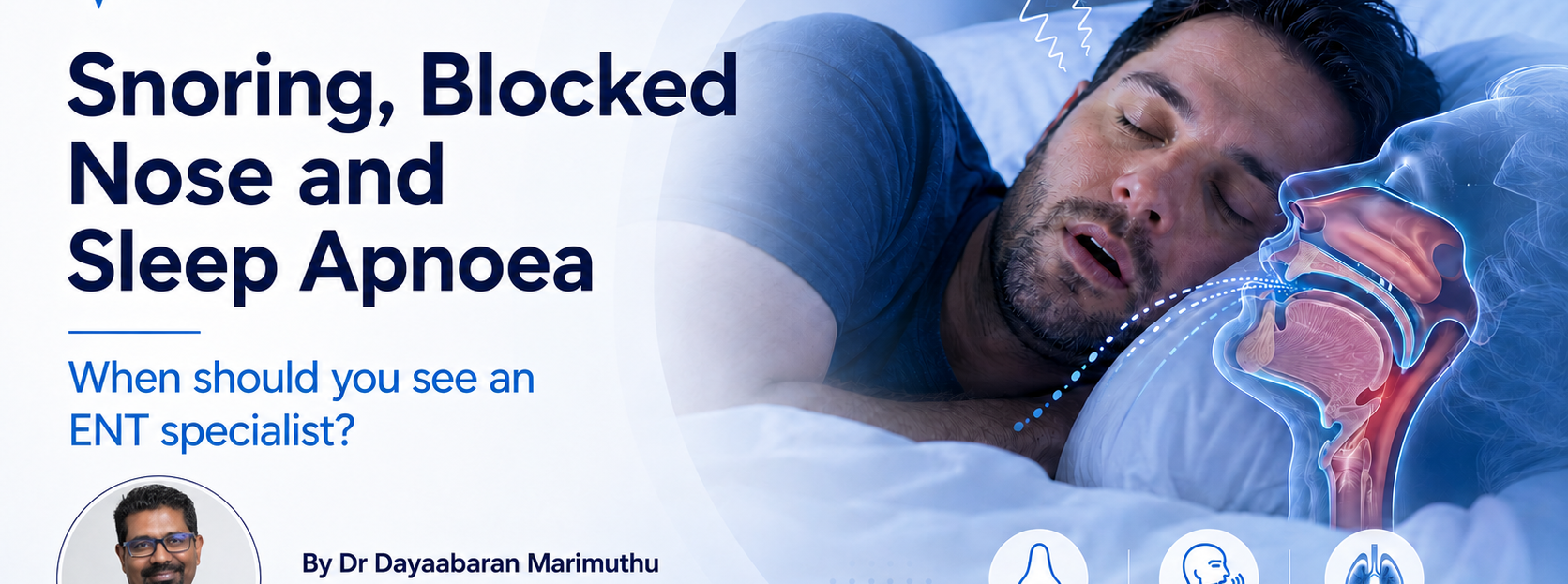
Snoring, Blocked Nose and Sleep Apnoea: When Should You See an ENT Specialist?
By Dr Dayaabaran Marimuthu
Consultant Otorhinolaryngologist, ENT & Head and Neck Surgeon
Snoring is common, but it should not always be ignored. For some people, snoring is simply a sound caused by vibration in the throat during sleep. For others, especially when it is loud, disruptive or associated with breathing pauses, it may be a sign of obstructive sleep apnoea.
As an ENT specialist, I often see patients who have lived with blocked nose, poor sleep, loud snoring or daytime tiredness for months or even years before seeking advice. Many people assume that snoring is normal, particularly if it has developed gradually. However, if snoring is affecting sleep quality, disturbing a partner, or causing concern about breathing at night, it is worth having a proper assessment.
What is obstructive sleep apnoea?
Obstructive sleep apnoea, often called OSA, happens when the upper airway repeatedly narrows or becomes blocked during sleep. This can interrupt normal breathing and reduce the quality of sleep.
Common symptoms can include:
Loud snoring
Pauses in breathing during sleep
Gasping, choking or snorting at night
Waking frequently
Morning headaches
Dry mouth on waking
Daytime tiredness
Poor concentration
Mood changes or irritability
Sometimes the patient is not aware of the breathing pauses. A partner or family member may be the first person to notice them.
Why does the nose matter in snoring and sleep apnoea?
The nose plays an important role in comfortable breathing during sleep. A blocked nose does not always cause sleep apnoea by itself, but it can make snoring worse and may contribute to poor sleep quality.
Common ENT causes of nasal blockage include allergic rhinitis, sinusitis, nasal polyps, enlarged turbinates and a deviated nasal septum. In children, enlarged adenoids or tonsils may also contribute to mouth breathing, snoring and disturbed sleep.
When patients have both snoring and nasal blockage, an ENT assessment can help identify whether there is a treatable problem in the nose, throat or upper airway.
When should you see an ENT specialist for snoring?
You should consider seeing an ENT specialist if you or your child has:
Persistent loud snoring
Breathing pauses during sleep
Gasping or choking at night
Poor-quality sleep
Daytime tiredness or poor concentration
Regular morning headaches
Persistent blocked nose
Mouth breathing at night
Recurrent tonsillitis
Enlarged tonsils
Children who snore regularly
Concerns about nasal polyps, sinus disease or throat obstruction
Snoring can have several causes. The important question is whether it is simple snoring or part of a wider breathing problem during sleep.
How is snoring or suspected sleep apnoea assessed?
Assessment usually starts with a careful clinical history. I ask about the pattern of snoring, sleep quality, breathing pauses, daytime symptoms, nasal blockage, allergies, sinus symptoms, throat symptoms and any relevant medical conditions.
An ENT examination may include assessment of the nose, mouth, throat, tonsils, soft palate, tongue base and neck. In some patients, nasal endoscopy may be recommended to examine the nasal passages and upper airway more clearly.
If obstructive sleep apnoea is suspected, a sleep study may be needed. This can help confirm whether sleep apnoea is present and assess how severe it is. This is important because treatment should be guided by the cause and severity of the problem.
What treatments are available?
Treatment depends on the individual patient.
For some people, lifestyle measures can help. These may include weight management, reducing alcohol intake close to bedtime, avoiding smoking and changing sleep position.
Medical treatment may be useful when nasal allergy, sinus inflammation or nasal blockage is contributing to symptoms. This may include nasal sprays, allergy treatment or treatment for sinus disease.
For patients with confirmed obstructive sleep apnoea, treatment may include CPAP therapy, oral appliances, medical treatment for nasal obstruction, or surgery in carefully selected cases.
ENT surgery is not suitable for everyone. However, it may be considered when there is a clear anatomical problem such as enlarged tonsils, nasal polyps, significant nasal blockage, or other areas of upper airway narrowing.
In children, enlarged tonsils and adenoids are common causes of snoring and sleep-disordered breathing. Children who snore regularly should be assessed carefully, particularly if they have disturbed sleep, mouth breathing, poor concentration, behavioural changes or daytime tiredness.
Why early assessment is important
Good sleep is essential for health, concentration, mood and quality of life. Persistent snoring, blocked nose and suspected sleep apnoea should not be dismissed, especially when there are breathing pauses, daytime symptoms or concerns raised by a family member.
The aim of ENT assessment is not simply to reduce snoring. It is to understand the cause, assess the airway, identify any treatable ENT problems and guide the patient towards the most appropriate treatment.
If you or your child has persistent snoring, blocked nose or disturbed sleep, seeking specialist advice can provide clarity, reassurance and a personalised treatment plan.
Dr Dayaabaran Marimuthu is a Consultant Otorhinolaryngologist, ENT Specialist and Head and Neck Surgeon based at Sena Specialist Hospital Segamat, Malaysia. He treats adult and paediatric ENT conditions, including nasal blockage, sinus disease, tonsil problems, snoring and obstructive sleep apnoea.