
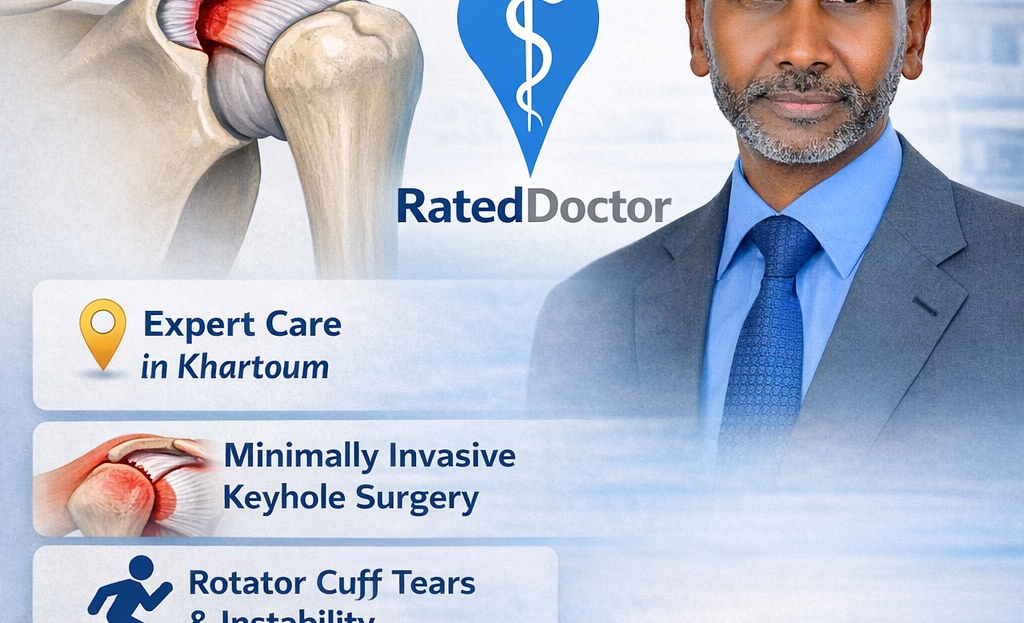
Shoulder Surgery in Khartoum: When Should You See a Specialist?
By Dr. Mohammed Gabra – Orthopaedic Surgeon (Shoulder, Elbow & Arthroscopy)
Shoulder Pain in Khartoum: A Common but Often Ignored Problem
Shoulder pain is one of the most common musculoskeletal complaints affecting patients in Khartoum and across Sudan. It can develop gradually over time or occur suddenly after an injury, significantly impacting daily activities, sleep, and work.
As an orthopaedic surgeon specialising in shoulder and upper limb surgery, I frequently see patients who delay seeking specialist care — often assuming the pain will resolve on its own.
While some conditions do improve with time, others require early diagnosis and targeted treatment to prevent long-term damage and loss of function.
What Causes Shoulder Pain?
The shoulder is a complex joint with a wide range of motion, making it vulnerable to several conditions.
The most common causes include:
- Rotator cuff tears (tendon injuries)
- Shoulder impingement
- Frozen shoulder (adhesive capsulitis)
- Shoulder instability or dislocation
- Sports-related injuries and overuse syndromes
Each condition has a different underlying cause and treatment pathway, which is why an accurate diagnosis is essential.
Rotator Cuff Tears: A Leading Cause of Shoulder Pain
One of the most frequent conditions I treat is a rotator cuff tear, which involves damage to the tendons that stabilise the shoulder.
Common symptoms include:
- Pain when lifting or rotating the arm
- Weakness in the shoulder
- Difficulty sleeping on the affected side
- Reduced range of motion
If these symptoms persist beyond a few weeks despite rest or physiotherapy, further evaluation is recommended.
Do You Always Need Surgery?
No — and this is a key point.
Most shoulder conditions can be effectively managed without surgery, particularly in the early stages.
Non-surgical treatments include:
- Physiotherapy and rehabilitation
- Activity modification
- Pain management
- Image-guided injections
However, surgery may be required in certain cases, including:
- Significant tendon tears
- Persistent pain despite conservative treatment
- Severe functional limitation
- Recurrent shoulder instability or dislocations
What Is Arthroscopic (Keyhole) Shoulder Surgery?
Modern shoulder surgery is commonly performed using arthroscopy, also known as keyhole surgery.
This minimally invasive technique uses a small camera and specialised instruments inserted through tiny incisions.
Advantages of arthroscopic surgery:
- Smaller incisions and minimal scarring
- Reduced post-operative pain
- Faster recovery
- Earlier return to daily activities
Conditions treated with arthroscopy:
- Rotator cuff tears
- Shoulder instability
- Frozen shoulder
- Shoulder impingement
Recovery After Shoulder Surgery
Recovery time depends on the condition and procedure performed.
- Minor procedures: a few weeks
- Rotator cuff repair: typically 3–6 months
- Full recovery: may take up to 6–12 months
A structured rehabilitation programme is essential to restore strength, movement, and long-term function.
When Should You See a Shoulder Specialist in Khartoum?
You should seek specialist advice if you experience:
- Persistent shoulder pain lasting more than 2–3 weeks
- Weakness or loss of function
- Recurrent dislocations
- Difficulty performing daily activities
- Pain affecting sleep
Early assessment often leads to simpler treatment and better outcomes.
My Approach to Shoulder Care
My approach is centred on:
- Accurate diagnosis using clinical expertise and imaging where needed
- Individualised treatment plans tailored to each patient
- Minimally invasive techniques wherever appropriate
- Focus on restoring function and quality of life
With international fellowship training in shoulder surgery and arthroscopy, I aim to bring advanced, evidence-based orthopaedic care to patients in Khartoum and across Sudan.