
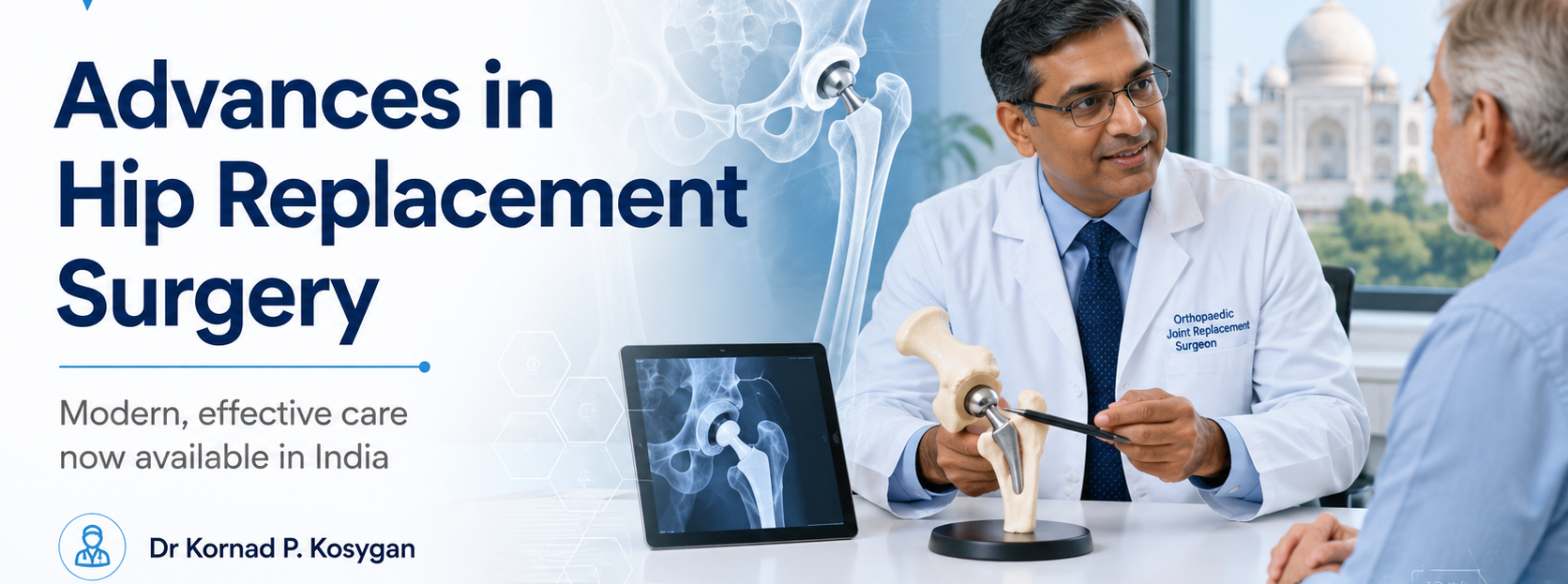
Advances in Hip Replacement Surgery: High-Quality Orthopaedic Care Is Now Available in India
Hip replacement surgery has changed significantly over the last two decades. For many patients with severe hip arthritis, avascular necrosis, previous injury or advanced joint damage, it can be one of the most effective operations for relieving pain, restoring mobility and improving quality of life.
As a UK-trained Consultant Orthopaedic Surgeon now practising in Chennai, India, I have seen how modern hip replacement surgery has evolved across both healthcare systems. Patients today are rightly more informed. They want to understand not only whether they need surgery, but also who will perform it, where it will be done, what implant will be used, how recovery will be managed and what long-term outcome they can reasonably expect.
For UK patients considering treatment in India, these questions are especially important.
What has changed in hip replacement surgery?
Modern hip replacement is no longer simply about replacing a damaged joint. It is about careful patient selection, accurate surgical planning, appropriate implant choice, safe anaesthesia, early mobilisation and structured rehabilitation.
The key advances include:
-
Better implant materials, including modern bearing surfaces designed for durability
-
Improved surgical techniques to support stability and recovery
-
More accurate pre-operative planning using digital imaging
-
Better anaesthetic and pain management protocols
-
Earlier mobilisation after surgery
-
More structured physiotherapy and rehabilitation pathways
-
Improved infection prevention and peri-operative care
-
Greater emphasis on patient-specific decision-making
These advances have made hip replacement a more predictable operation for many patients, provided it is performed for the right indication, in the right hospital setting, by an experienced surgical team.
Why surgical judgement still matters
Technology is important, but good hip replacement surgery still depends heavily on surgical judgement.
The decision to proceed with surgery should take into account the patient’s age, symptoms, X-rays, functional limitation, medical fitness, bone quality, lifestyle and expectations. Not every painful hip needs surgery immediately. In some patients, non-surgical treatment, physiotherapy, injections, weight optimisation or lifestyle modification may be appropriate before considering an operation.
When surgery is needed, the aim is not just to replace the hip, but to restore function safely. That means choosing the right implant, positioning it accurately, managing leg length, reducing the risk of dislocation, preventing infection and planning rehabilitation from the outset.
Hip replacement in India: what UK patients should know
India now has well-established centres offering advanced orthopaedic surgery, including hip and knee replacement. In major private hospitals, patients can access experienced surgeons, modern theatres, advanced imaging, intensive care support, physiotherapy and international patient pathways.
For UK patients, India may also offer a more cost-effective route to private orthopaedic care. However, cost should never be the only factor. The best value in healthcare comes from the combination of surgeon experience, hospital quality, implant choice, safety systems, communication and aftercare.
Patients considering surgery in India should ask clear questions:
-
What is my diagnosis?
-
Do I definitely need surgery?
-
What type of hip replacement is recommended?
-
What implant will be used?
-
What are the risks in my individual case?
-
How long will I be in hospital?
-
When can I fly after surgery?
-
What rehabilitation will I need?
-
How will follow-up be arranged after I return to the UK?
-
What happens if I have a concern after travelling home?
A well-planned pathway is essential.
Combining UK training with Indian orthopaedic practice
I trained and worked in the United Kingdom for many years, including specialist orthopaedic training, lower limb and arthroplasty fellowship experience, and consultant practice within the NHS. I later returned to India and now practise as a Senior Consultant in Orthopaedics and Sports Medicine at Apollo Hospitals, Chennai.
This background has shaped the way I approach patients considering surgery from outside India. UK patients are often used to detailed consultations, clear explanations, shared decision-making and written treatment plans. These are important parts of good care.
When patients travel for surgery, communication becomes even more important. They need to understand the diagnosis, the proposed procedure, the expected recovery and the practical details around travel, rehabilitation and follow-up.
Why Chennai is becoming relevant for orthopaedic care
Chennai has a long-established reputation for specialist medical care in India. Patients from India and overseas travel to the city for cardiac surgery, oncology, transplant medicine and orthopaedics.
For hip replacement patients, the advantages can include access to experienced consultants, modern hospital infrastructure, English-speaking clinical teams and coordinated international patient services. At the same time, patients should be realistic: hip replacement remains major surgery and requires proper preparation and recovery.
The priority should always be safety first, followed by function, comfort and long-term outcome.
What patients can expect from modern hip replacement
Every patient is different, but the general aim of hip replacement is to reduce pain, improve walking ability and help patients return to a more active life.
Recovery usually begins immediately after surgery with mobilisation and physiotherapy. Most patients need support in the early stages and should follow advice carefully around wound care, exercises, walking aids, blood clot prevention and activity progression.
Full recovery takes time. Patients should not judge the success of surgery by the first few days alone. The early goal is safe mobilisation. The longer-term goal is to regain confidence, strength and independence.
A balanced view on cost-effective care
India can offer high-quality orthopaedic care at a more cost-effective price point than many Western private healthcare systems. But patients should avoid choosing treatment based only on the lowest quoted package.
The important question is not simply, “How much does it cost?”
The better question is:
“Am I receiving safe, consultant-led care in a reputable hospital, with the right implant, a clear surgical plan and proper follow-up?”
That is where true value lies.
Final thoughts
Hip replacement surgery has advanced greatly. For the right patient, it can be life-changing. India now offers access to modern hip replacement surgery in well-established hospital settings, often at a more affordable cost than private care in the UK.
For UK patients considering surgery in India, the decision should be made carefully, with proper medical review, clear communication and realistic expectations.
Good surgery begins before the operation. It starts with the right diagnosis, the right discussion and the right plan.